



Contents
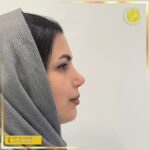
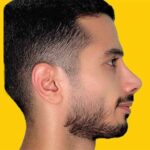
In Persian usage a “bony nose” (ostokhani) is a nose with relatively thin skin and a clearly visible bony structure, often with a bump on the bridge, a crooked line or a wide bony base. Because the skin is thin, the shape of the bone and cartilage shows through, which means that small changes can have a visible effect.
Typical concerns
- a hump or bump on the bridge
- a nose that is crooked or deviated
- a wide bony bridge
- a tip that is too long or sharply pointed
- breathing problems together with the outer shape
How is the operation performed?
The surgeon reduces or reshapes the bony and cartilaginous framework. Depending on the case this includes:
- Hump reduction: the bump is lowered with fine instruments.
- Osteotomies: the nasal bones are carefully cut and repositioned to narrow a wide bridge or to straighten a crooked nose.
- Tip refinement: cartilage is reshaped or supported.
- Septum correction: if breathing is restricted, the septum is straightened in the same session.
The operation is performed under anesthesia in a hospital. Open or closed access is chosen according to the findings.
Why thin skin needs precision
With thin skin, irregularities that would be hidden in thicker skin can become visible. Careful smoothing of the bridge and precise handling of the cartilage are therefore important. The planned change should always fit the face; removing too much can cause breathing problems or an unnatural profile.
Recovery
A splint is worn for about a week. Bruising around the eyes and swelling are common after bone work and fade over one to three weeks. Swelling at the tip can persist for months. The result is judged after about a year.
Risks
Bleeding, infection, asymmetry, numbness, breathing changes and the need for a revision are possible, as with any nose operation. Your surgeon will discuss them with you before the procedure.
Frequently asked questions
Can a hump be removed without changing anything else? Often the bridge and tip are planned together so that the profile stays balanced.
Will the bones heal in the new position? Yes, they stabilise over the weeks after surgery; protecting the nose during this time is important.
Consultation
Book a free consultation with Dr. Seyed Mohammad Talebzadeh at Pars Specialty Hospital in Rasht (+98 13 3212 9500). An in-person examination is needed for a reliable assessment.